Two chapters of one life
Bodh Gaya is where the Buddha attained enlightenment beneath the Bodhi Tree; Sarnath, near Varanasi, is where he gave his first teaching soon afterwards. Journeys can run either way. Our Awakening & the First Teaching begins at Bodh Gaya and ends at Sarnath, in the order of the Buddha's own life; others start in Varanasi, the easier place to arrive. Either way works. Beginning at Sarnath lets you learn the vocabulary of the sites, the stupas, monastery plans and carved symbols, before you reach the living temple at Bodh Gaya. Awakening & the First Teaching joins the two over a suggested four nights, with the travel order set by your arrival and departure gateways rather than by the story.
Reading Sarnath well
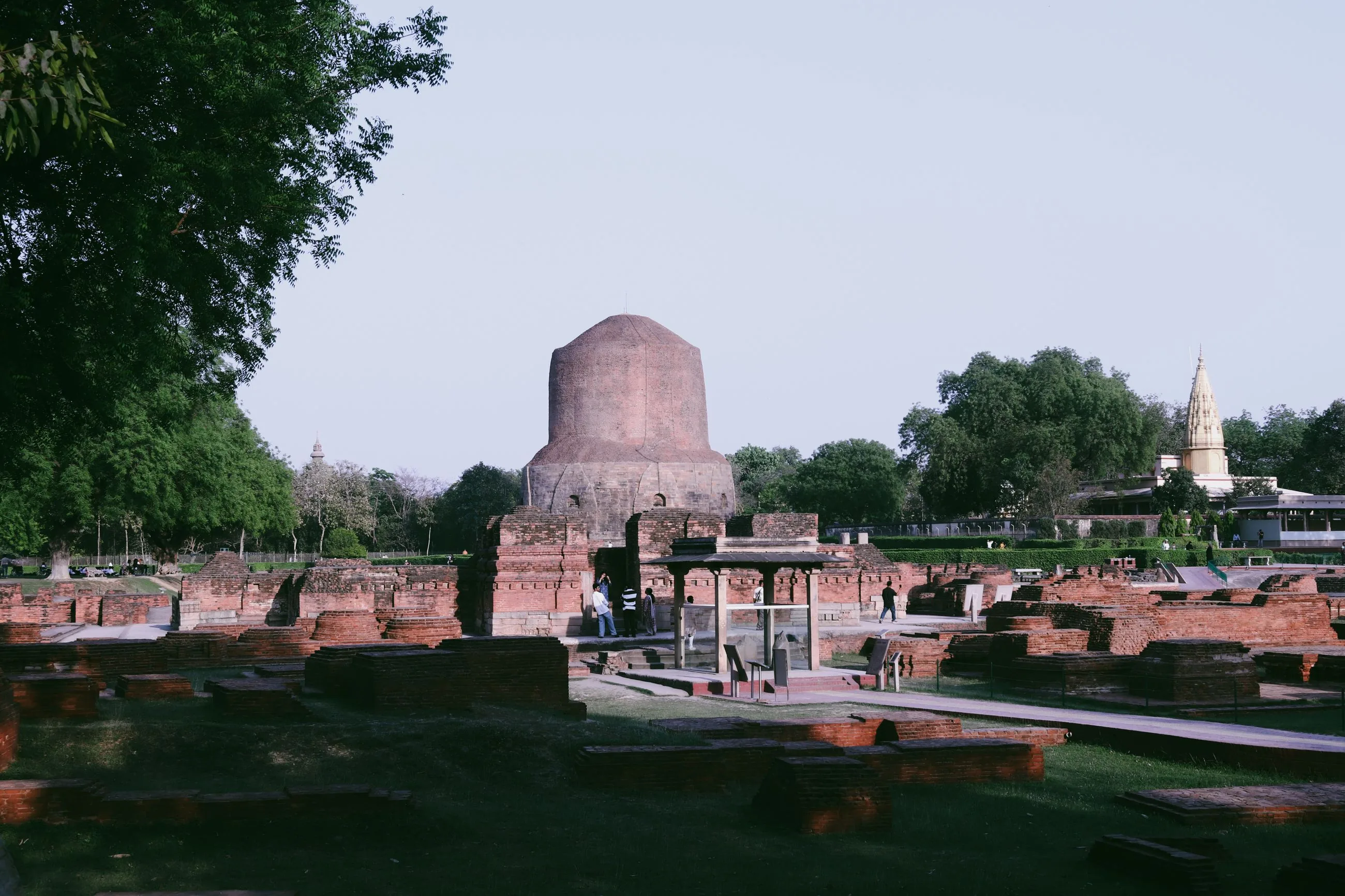
Sarnath's archaeological park holds the Dhamek Stupa, the base of the Dharmarajika Stupa and the brick foundations of monasteries that once housed large communities of monks. In July 2026 it was inscribed on the UNESCO World Heritage List together with the Chaukhandi Stupa nearby. The site museum, home to the Lion Capital of Ashoka, is closed on Fridays while the park stays open, so the Sarnath day is fixed first. Sarnath with a Specialist Guide pairs the park and museum with someone trained to read ruins and inscriptions, and transport and entry are listed separately in your quotation.
The road between them
Sarnath and Bodh Gaya are about 250 km apart, crossing from Uttar Pradesh into Bihar, and the drive usually takes five to seven hours depending on traffic and stops. Treat it as a travel day in its own right: leave after breakfast, stop for a proper lunch and arrive with the late afternoon free. Trains are an alternative, with faster services from Pt. Deen Dayal Upadhyaya Junction reaching Gaya in around three hours, followed by a short drive. Flight and train booking assistance can help with tickets, though no seat is promised before it is confirmed.
A morning at the Mahabodhi
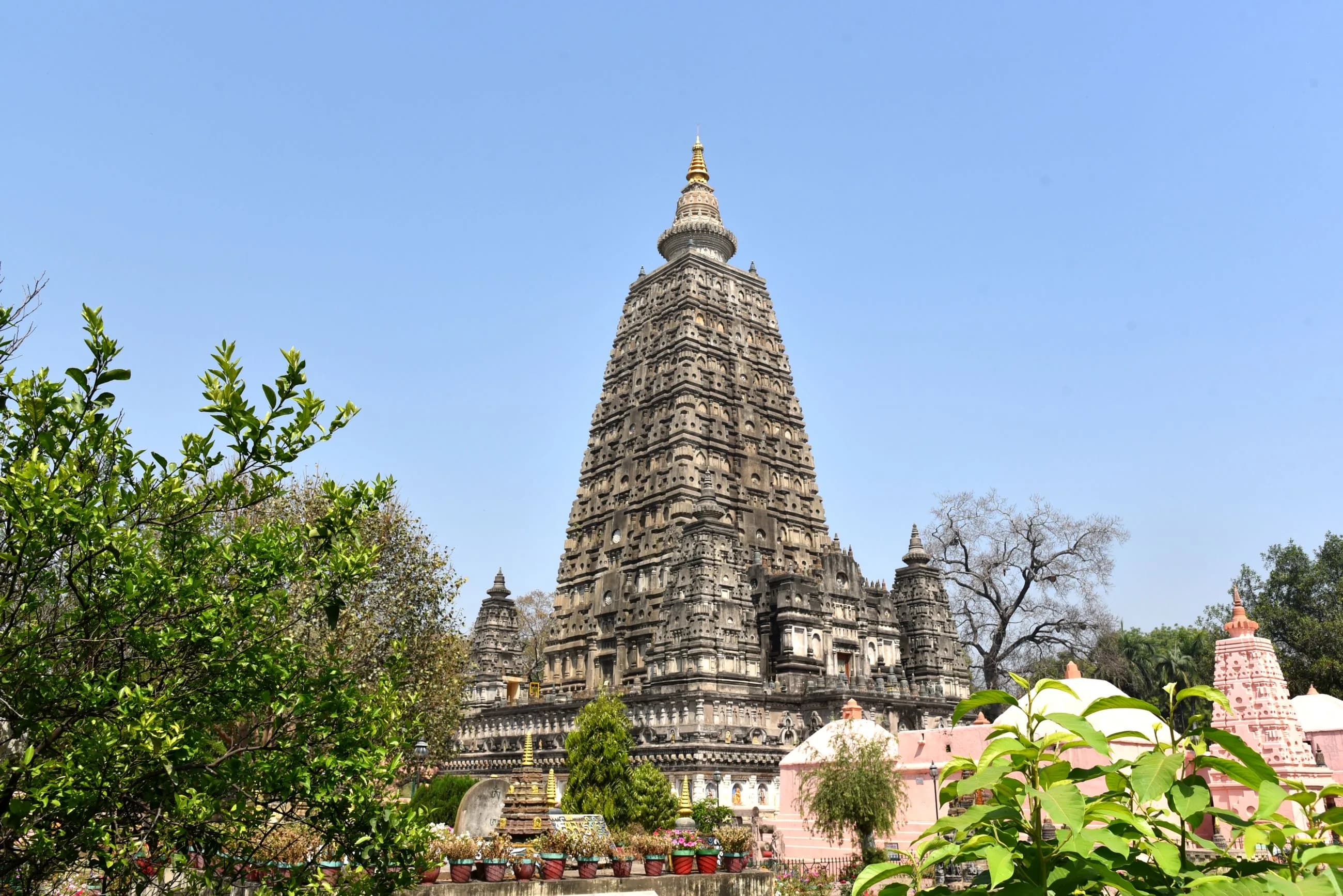
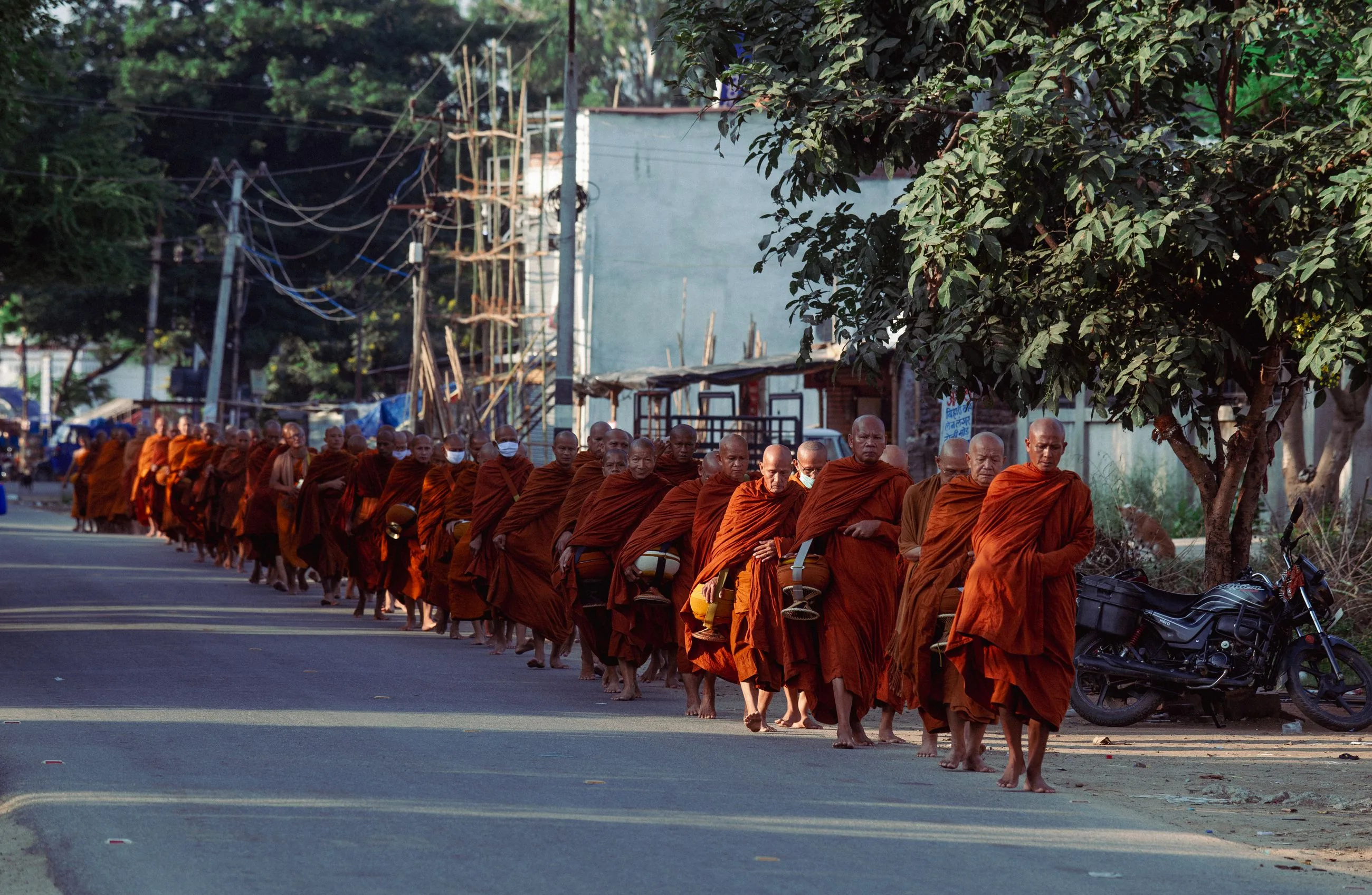
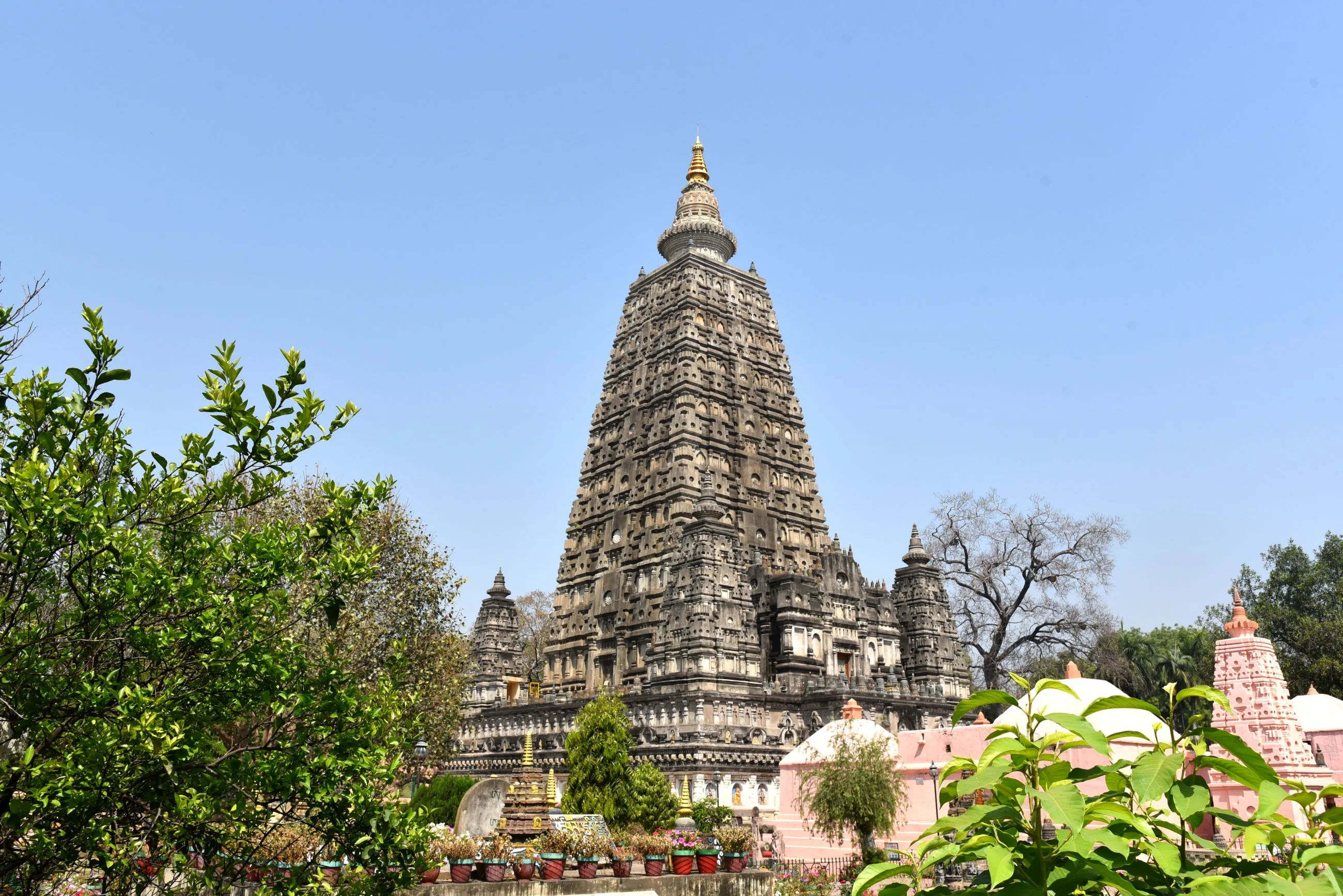
The Mahabodhi Temple complex, a World Heritage Site since 2002, includes the great temple, the Bodhi Tree revered as a descendant of the original, the Vajrasana and the shrines associated with the weeks after the enlightenment. Come early, when monks and pilgrims from Tibet, Thailand, Sri Lanka, Myanmar, Japan and beyond are circling the tower in the half-light. Move through the complex with your guide, then let the guide step back. The most valuable thing a visitor can do here is find a quiet place, sit down and stay a while without looking at the time.
It is an active place of worship first, so voices stay low and prayer has right of way. Phones are not allowed inside and are left at a counter at the entrance, cameras may need a separate ticket, and the rules are set by the temple management committee, so they are confirmed before you leave the hotel. Shoes come off at the entrance; in winter, socks make the stone far kinder underfoot. Those who want to meditate can return in the evening, when the light softens, the lamps are lit and the chanting carries across the complex.
Monasteries, Rajgir and Nalanda
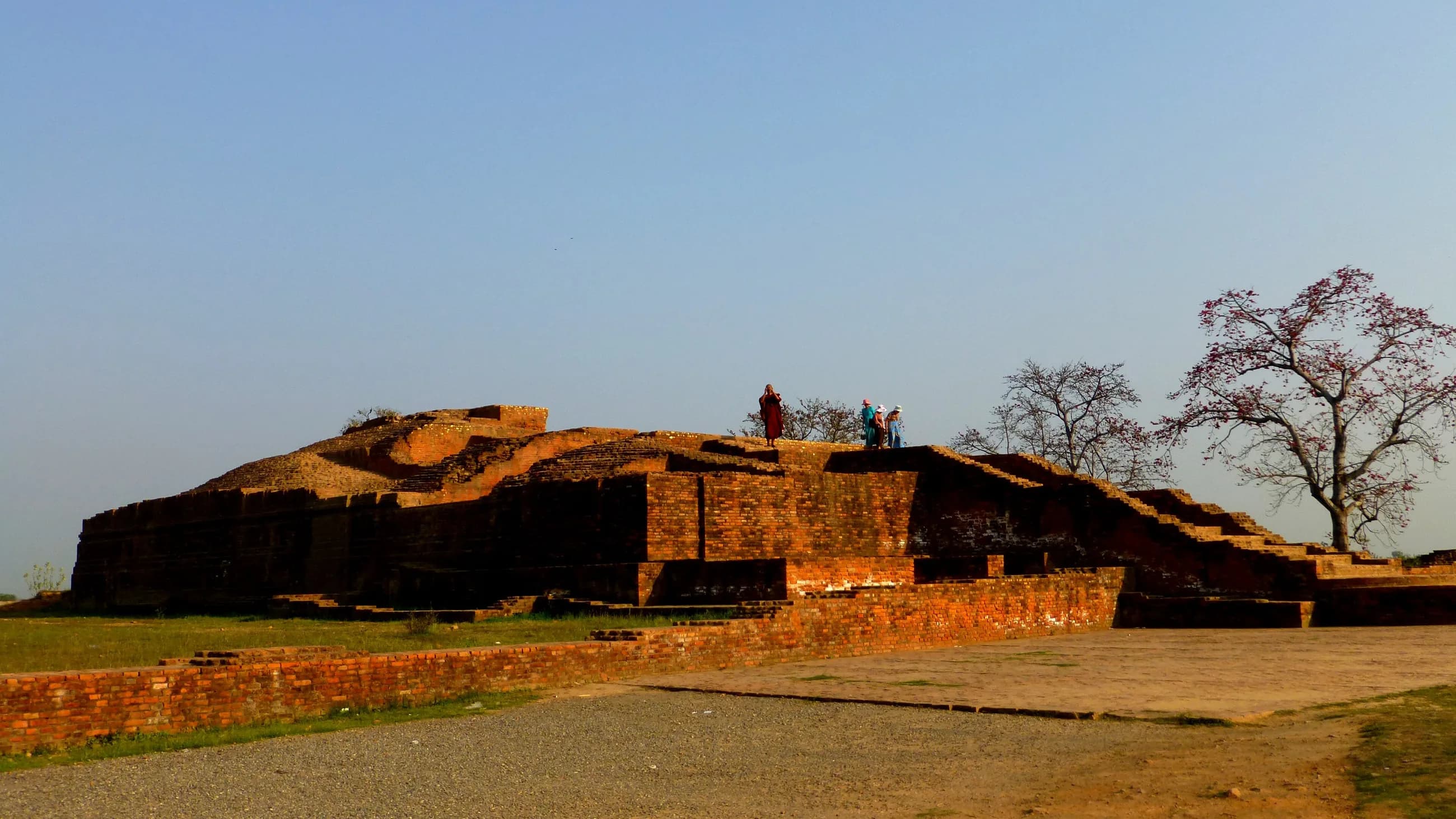
Choose two or three of Bodh Gaya's national monasteries rather than all of them: the Thai temple with its gilded roof, the painted Bhutanese monastery and the Great Buddha Statue among its gardens make a calm afternoon. Confirm visiting times rather than assuming every monastery is open for sightseeing. Those continuing further can add Rajgir, where the Buddha taught on Vulture's Peak, and the ruins of Nalanda, the ancient monastic university and also a World Heritage Site. Language assistance and interpreters can help pilgrims more comfortable in another language, subject to confirmation of the language and sessions.
Gaya, Lumbini and the wider circuit
Gaya, about fifteen kilometres north of Bodh Gaya, is a separate Hindu pilgrimage city known for the Vishnupad Temple and ancestral rites. A Buddhist journey does not include it unless you expressly add it. Lumbini, the Buddha's birthplace, is in Nepal and is handled as a separate extension enquiry. Within Uttar Pradesh, the story continues at Kushinagar, where the Buddha passed away, and Shravasti, where he spent many rainy seasons; Sarnath Kushinagar and Shravasti Pilgrimage covers those sites. The In the Footsteps of the Buddha collection shows each journey's destinations and duration at a glance.