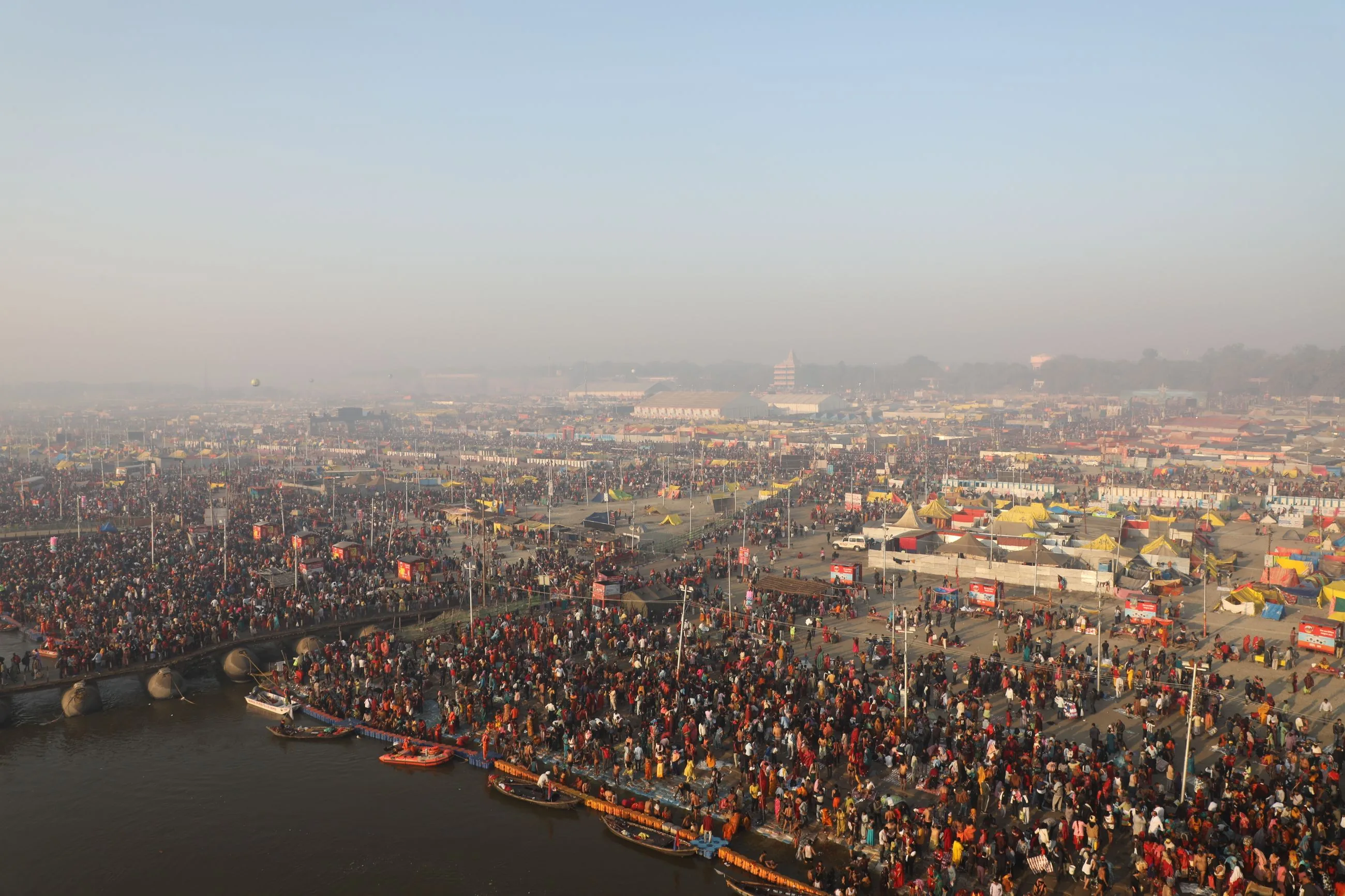
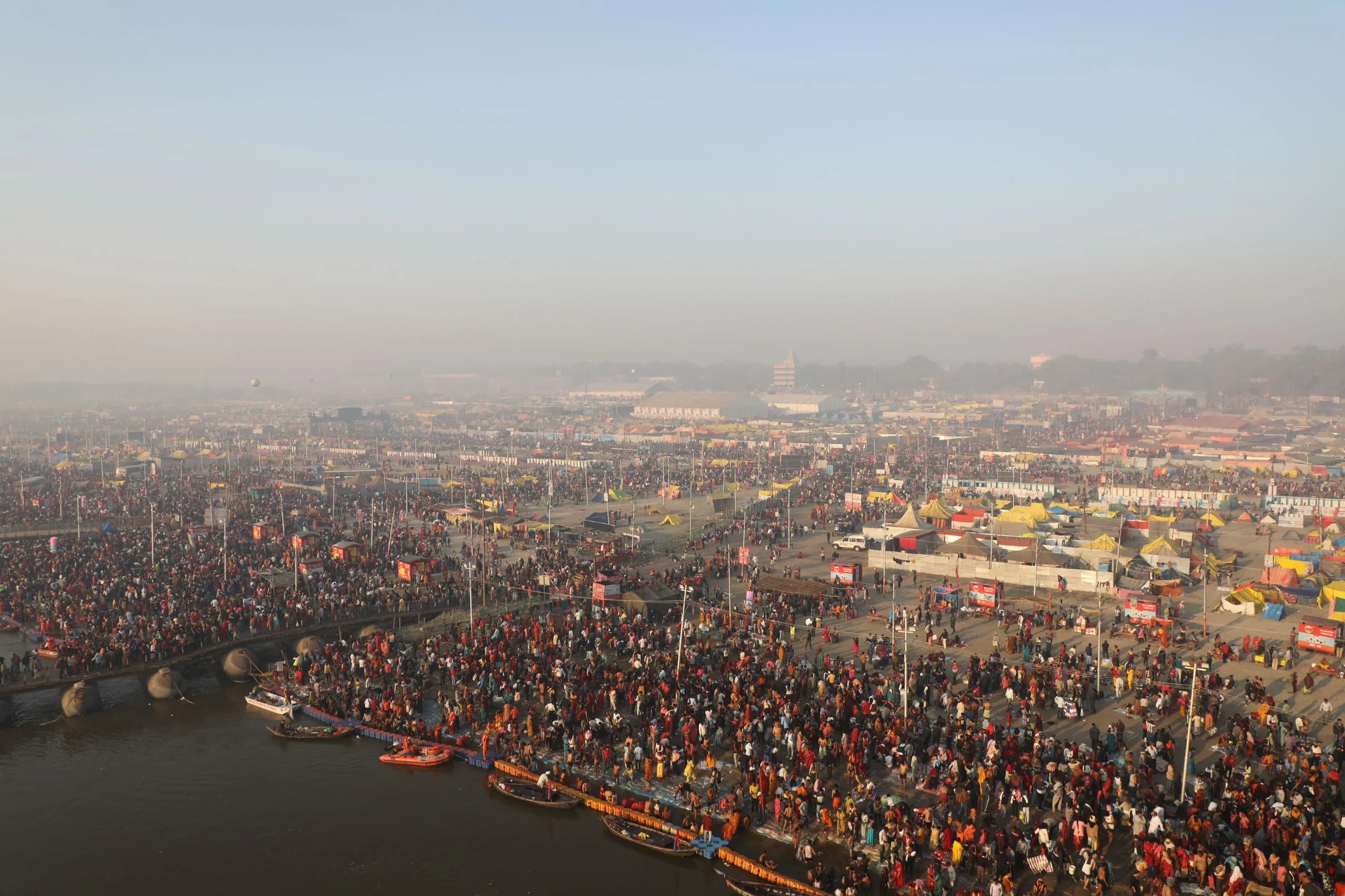
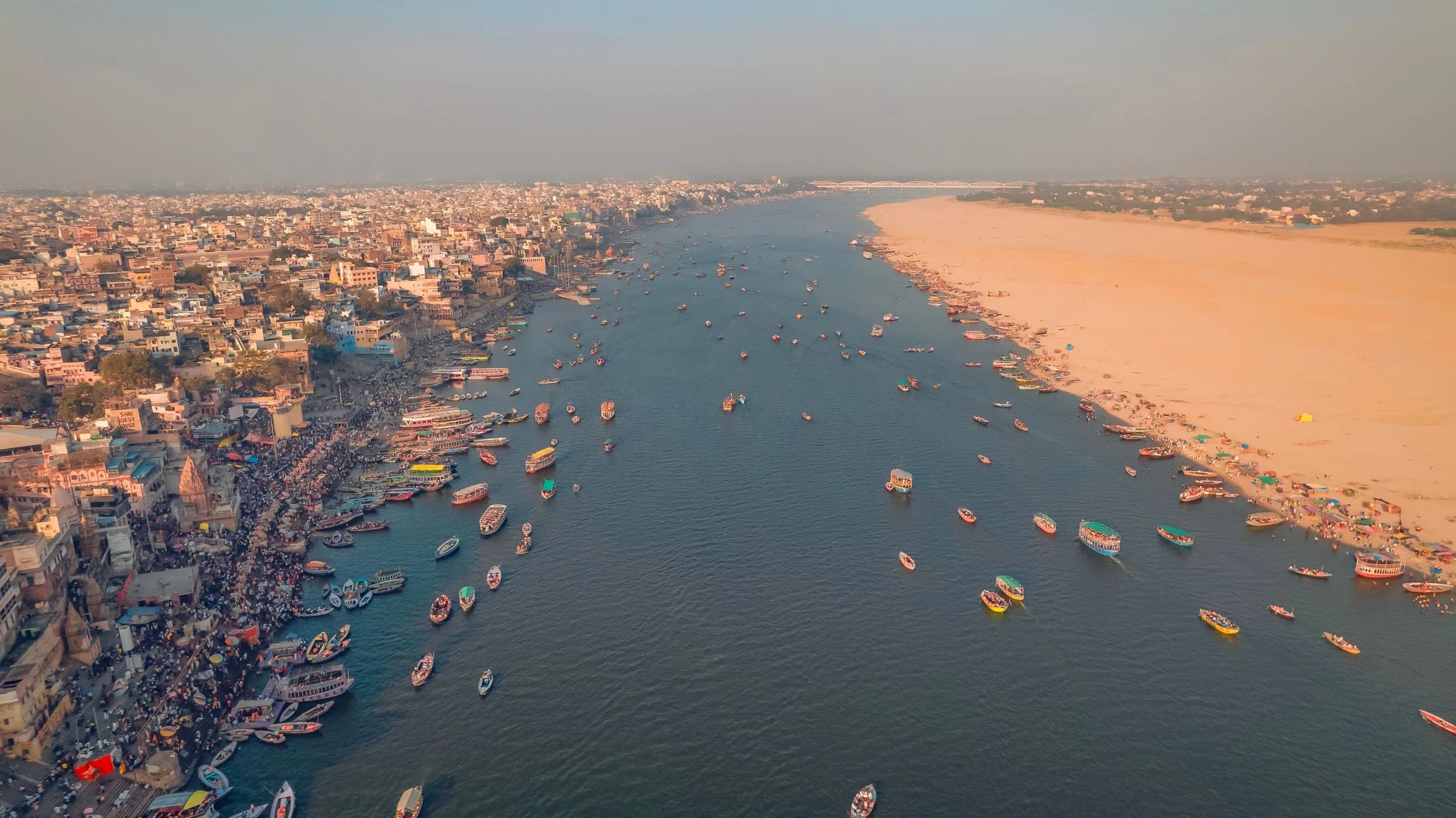
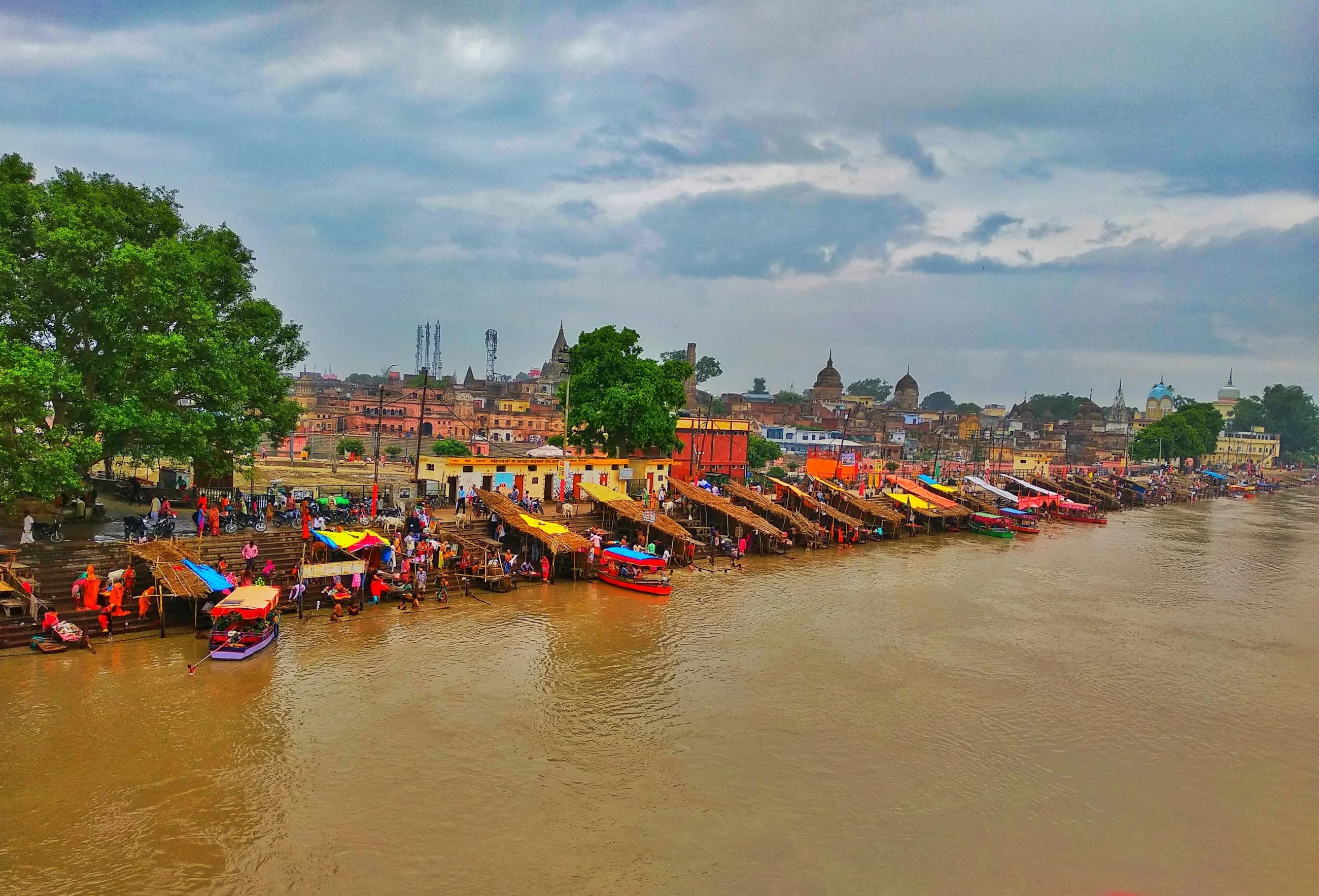
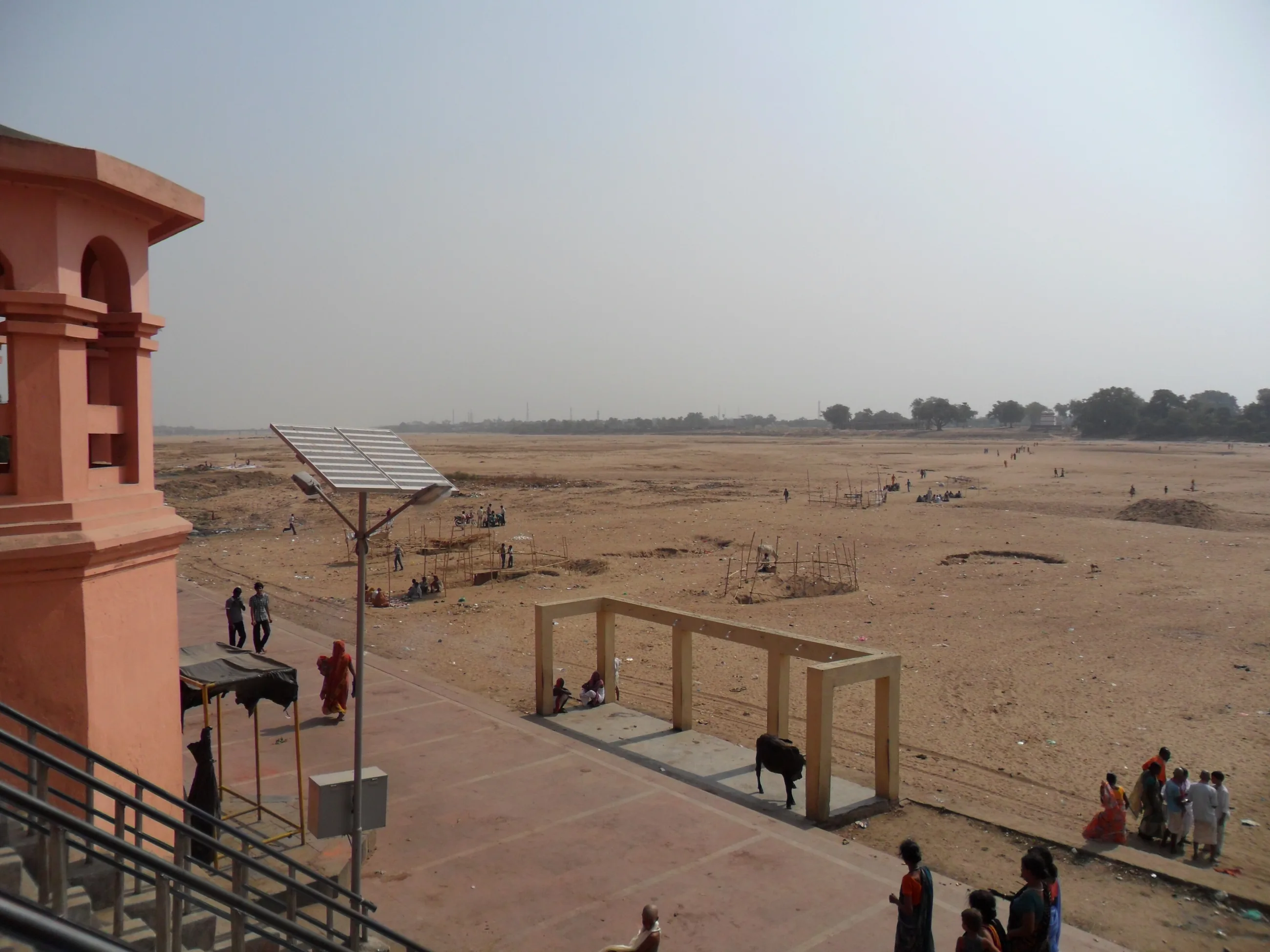
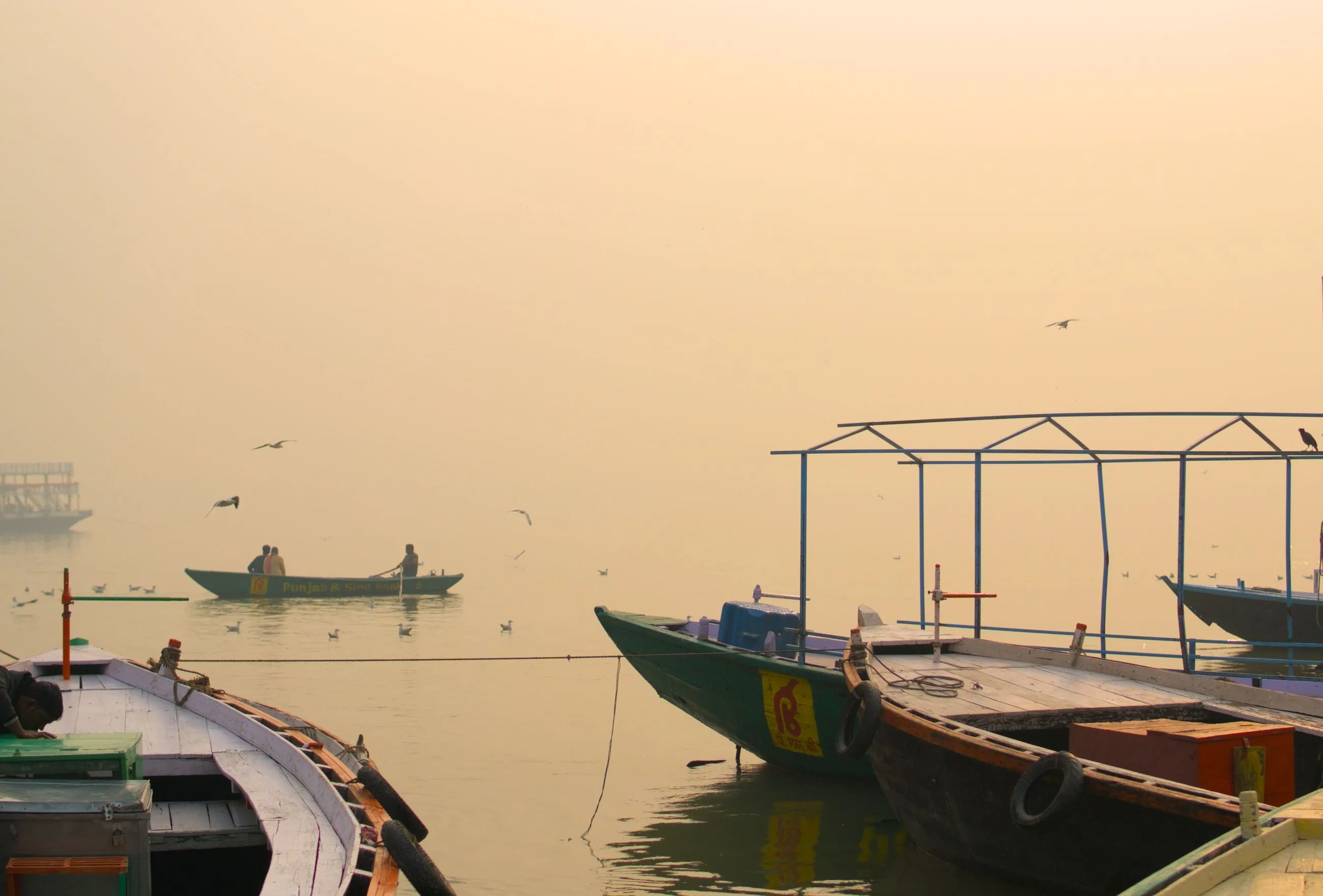
Prayagraj stands at the Triveni Sangam, where the Ganga and the Yamuna meet and where tradition holds that the unseen Saraswati joins them. Every winter the floodplain fills with the camps of the Magh Mela, and every twelve years with the Kumbh Mela, held most recently in early 2025. Away from the river, the city keeps Akbar's fort, Anand Bhawan and the wide avenues of old Allahabad.
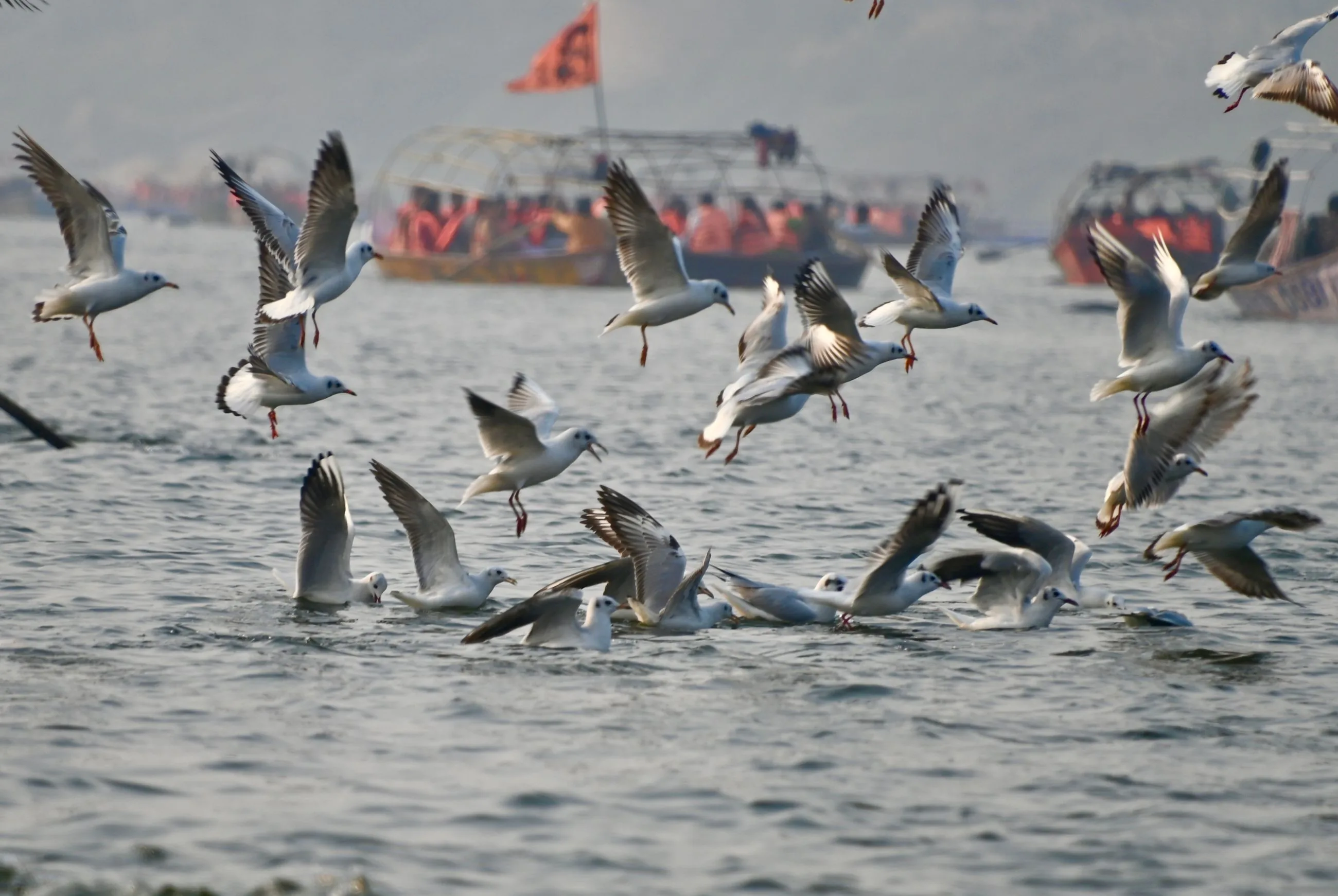
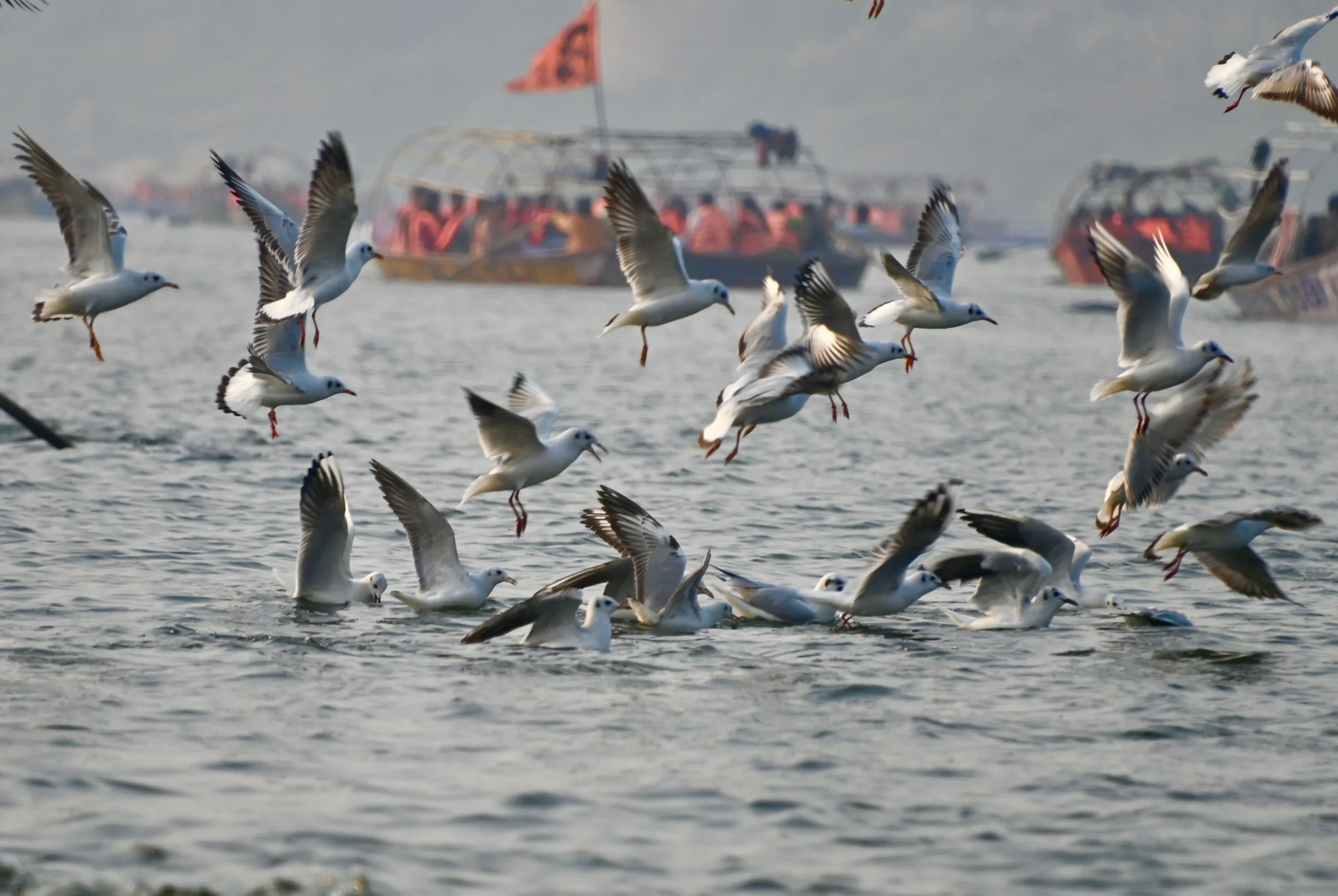
Gulls flying over the Ganges with boats behind, Prayagraj
THE PLACE
Prayagraj, in practice.
Getting there
Prayagraj airport at Bamrauli has domestic flights, and Prayagraj Junction is a major station on the Delhi to Kolkata line. By road, Varanasi is about 120 km away, usually around three hours, and Ayodhya around 170 km, roughly four hours by car. During the Magh Mela and on major bathing days, vehicles are diverted and long stretches are walked, so arrival times need generous margins.
Suggested pacing
One night is usually enough, placed between Varanasi and Ayodhya so a long drive becomes two shorter days with the Sangam at dawn in between. Two nights suit a slower morning on the river or time for the museums. Varanasi and Prayagraj Pilgrimage confirms the overnight pattern to suit the guests, with a longer assisted version for travellers who need more rest.
Walking and steps
Reaching a Sangam boat means walking across sand or down a ghat, then stepping into the boat; bathing platforms are moored boats with planks, not fixed jetties. Bathing in the river needs steady footing and care with the current, and the water is cold in winter. On mela days, vehicles stop far from the river and the walk can run to several kilometres. The fort corridor and Bade Hanuman involve standing in queues.
When to go
October to March is the comfortable season, with misty mornings and wintering gulls from December to February. The Magh Mela runs through January and February, sometimes into early March, and in a Kumbh year the whole city is transformed, with hotels and roads planned months ahead. April to June is very hot. In the monsoon the rivers rise, the lower ghats flood and boats may be stopped altogether.
Etiquette
Bathers at the Sangam are at prayer, so do not photograph them without consent, especially women bathing. Agree the scope of any ritual and the offering with the priest before it begins, not after. Dress modestly, carry clothes to change into after a bath, and leave no plastic or packaging in the river. Ascetics at the mela camps often welcome conversation, but photographs are a matter of permission.
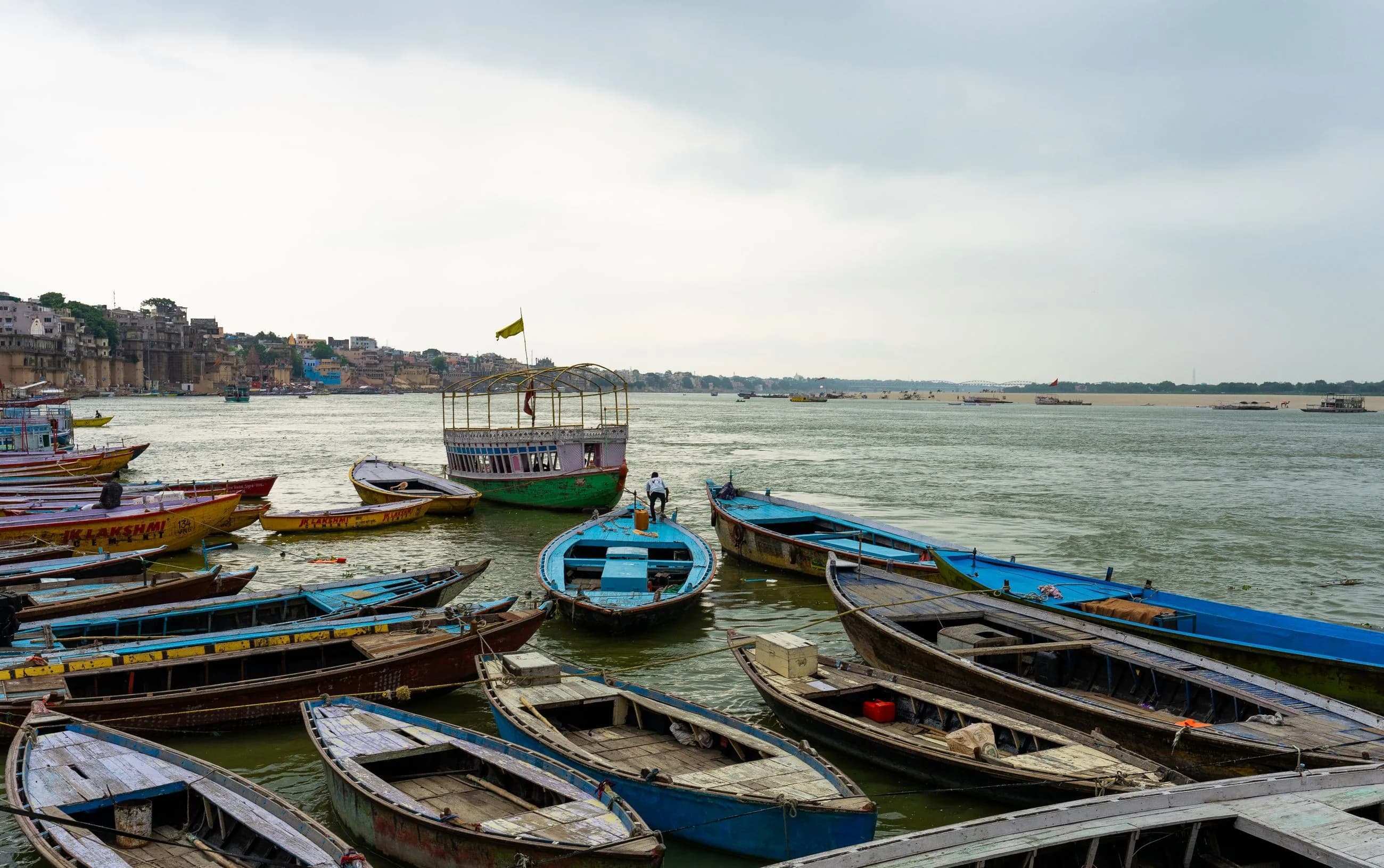
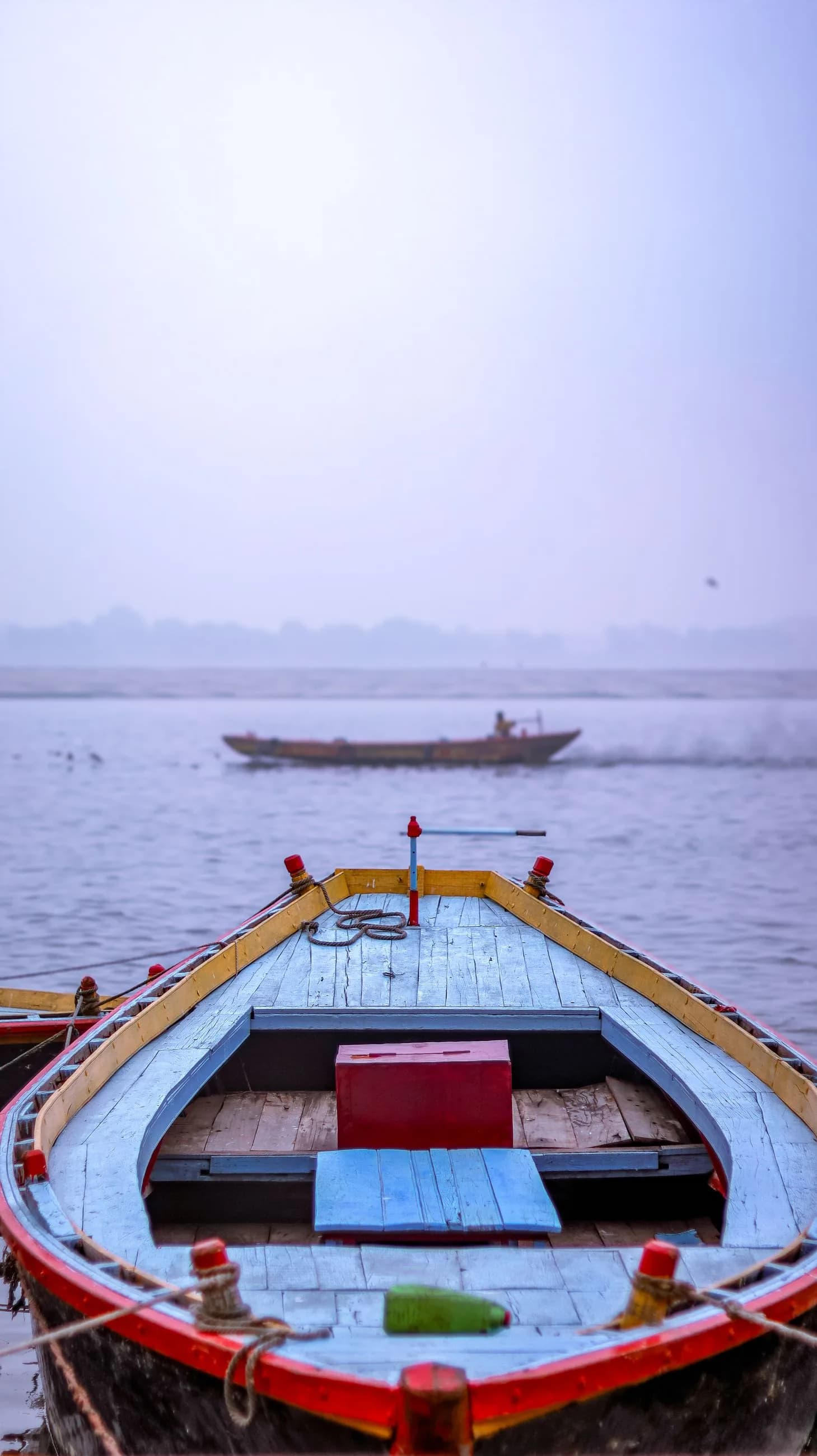
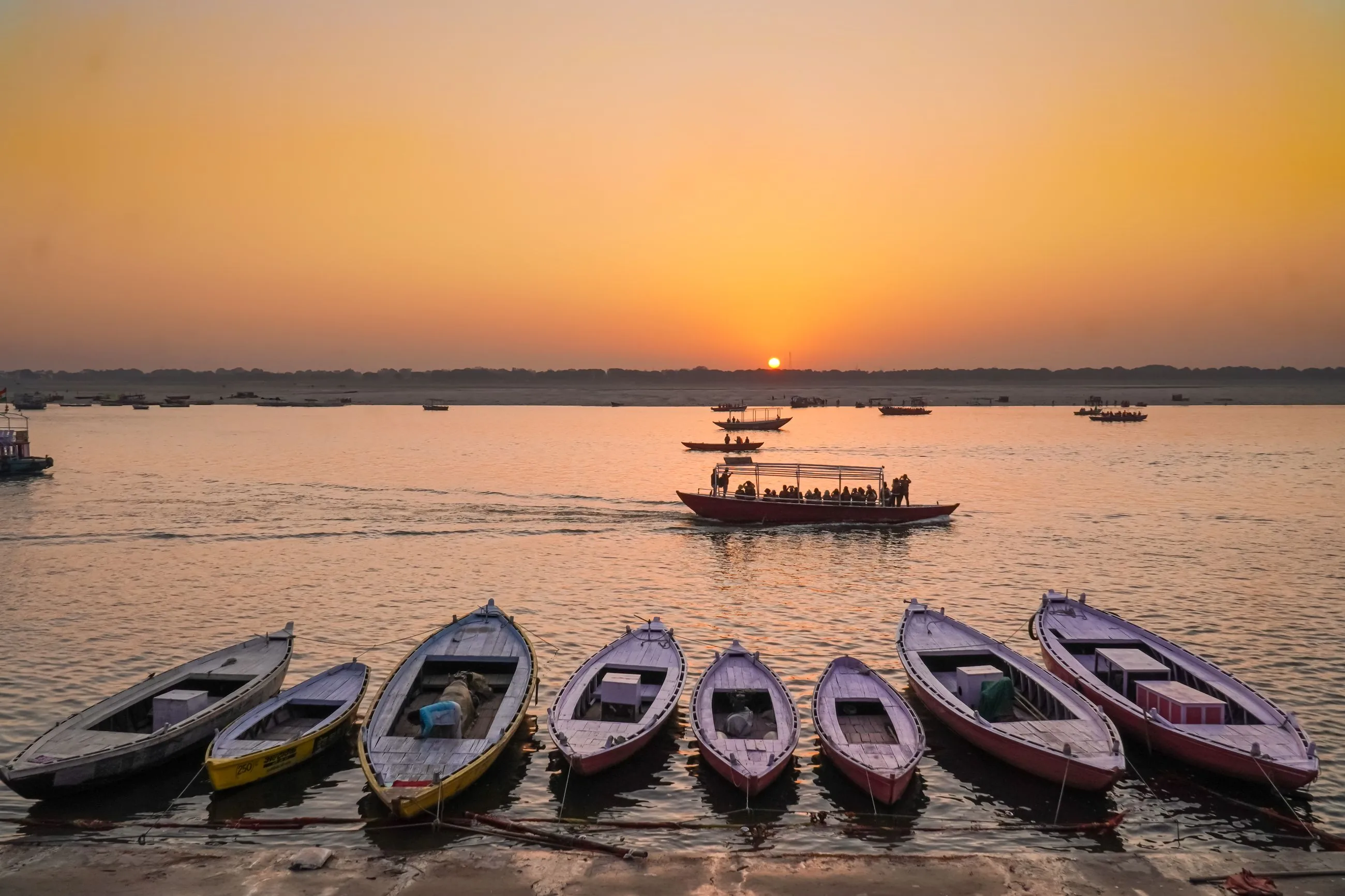
The heart of a visit is the boat out to the Sangam. From the ghats near the fort, boats head to a point mid-river where the two waters can be seen meeting, the Ganga paler and silty, the Yamuna darker and greener. Pilgrims step onto moored platforms to bathe, and priests perform rites on the boats themselves. From November to February migratory gulls follow the boats and early mornings are often misty. Going out soon after first light means softer light and fewer boats, and every crossing depends on river conditions and the orders of the local administration.
Akbar built the fort above the confluence in 1583, and most of it is still held by the army. The Akshayavat, the undying banyan of pilgrim tradition, and the underground Patalpuri temple are reached through a corridor opened to devotees, with access set by the authorities. Close by, the Bade Hanuman temple is unusual: the image lies reclining, partly below ground level, and in the monsoon the river is said to rise to touch it. Together they make a short morning after the boat.
Inland, the city changes register. Anand Bhawan, the Nehru family home, is a museum of the freedom movement; Khusro Bagh holds Mughal tombs in a walled garden; and All Saints Cathedral is a notable Gothic Revival church designed by William Emerson. Prayagraj sits between Varanasi and Ayodhya on the pilgrim map, which is why it appears in Varanasi and Prayagraj Pilgrimage and in The Sacred Confluence. One night is usually enough to see it without hurrying.
NOT TO MISS
The places that make it.
A boat to the Sangam at first light
A boat from the ghats near the fort to the meeting of the waters before the river fills. In winter the gulls wheel over the bow and the mist lifts slowly off the water. Shared or private is stated in your quotation.
A prayer or bath at the confluence
Many pilgrims bathe from the platforms or perform a short puja with a priest. If a ritual matters to you, mention it when you enquire; its scope, priest and timing are confirmed in writing, and towels and a change of clothes are planned in advance.
Akshayavat and Patalpuri
Inside the fort, the banyan of pilgrim tradition and the underground temple beside it. Access is controlled by the authorities who hold the fort, so the visit is timed to the current opening arrangements.
The reclining Hanuman
Bade Hanuman, near the Sangam, where the image lies on its back below ground level. A short, crowded and joyful stop, easily made straight after the boat.
Anand Bhawan and Khusro Bagh
The Nehru family home, kept as a museum of the freedom movement, and the Mughal tombs of Khusro Bagh in their walled garden. An afternoon for those interested in history beyond the river.
The Magh Mela, in season
Each winter a tented city rises on the sandbanks, with ascetics, pilgrims and evening discourses. The main bathing days bring enormous crowds and traffic diversions; on other days a guide who knows the camps makes the mela easier to read.
A suggested four-day pilgrimage: the evening aarti from a boat and Kashi Vishwanath in Varanasi, then the road to Prayagraj for a holy dip at the Triveni Sangam, Bade Hanuman, Anand Bhawan and Alopi Devi.
A suggested six-day pilgrimage through three sacred towns: Kashi Vishwanath, Annapurna, the Ganga and Sarnath at Varanasi, a holy dip at the Sangam in Prayagraj, and the Sarayu and the Shri Ram Janmabhoomi Mandir at Ayodhya.
5 Nights · 6 DaysVaranasi, Prayagraj and Chitrakoot by road, returning to Prayagraj or Varanasi for departure
Five nights on three sacred rivers: the Ganga at Kashi, the Sangam at Prayagraj and the Mandakini at Chitrakoot, with darshan, Sarnath, the Kamadgiri parikrama and the Ramghat aarti.
7 Nights · 8 DaysExtended four-destination pilgrimage: Varanasi, Prayagraj, Chitrakoot and Ayodhya by road
Seven nights across four pilgrim places: Kashi and Sarnath, a snan at the Sangam, the ghats and hills of Chitrakoot, and three nights in Ayodhya on the Sarayu.
5 Nights · 6 DaysVaranasi, with a day at the Sangam in Prayagraj, then Gaya and Bodh Gaya
Five nights from Kashi to Gaya: rituals at the Triveni Sangam on a day from Varanasi, Kashi Vishwanath and Manikarnika, and Pind Daan at the Vishnupad temple and the Phalgu, with the Mahabodhi Temple.
7 Nights · 8 DaysVaranasi, Prayagraj and Chitrakoot, back through Varanasi to Gaya, with a visit to Bodh Gaya
The ghats and Kashi Vishwanath at Varanasi, the Sangam at Prayagraj, Ram Ghat and Kamadgiri at Chitrakoot, and Pind Daan at Gaya's Vishnupad Temple, in an eight-day private pilgrimage by road.
Yes. Boats take bathers to platforms at the confluence. Bathing is your choice and depends on conditions on the day; in winter the water is cold, and in the monsoon boats may not run at all.
Is the Magh Mela worth planning around?
If you want to see the great pilgrim camps, yes, but choose your dates carefully. The main bathing days draw vast crowds and road restrictions. For a calmer visit, travel in the mela season but avoid those particular days.
Is one night in Prayagraj enough?
For most pilgrims, yes. A night breaks the drive between Varanasi and Ayodhya and gives you the Sangam in early light. Add a second if you want the museums or a slower start.
PLAN WITH TOURMELLOH
Varanasi and beyond, arranged for you.
Tell us the places on your mind, your dates and who is travelling. We reply with a written proposal shaped around you.