
Darshan at Ram Mandir
Give the temple a clear morning with no onward drive pressing. Expect security checks, a long walk along the approach and a brief, intense moment before the image. Travel light and agree a meeting point for afterwards.
Rituals and occasions
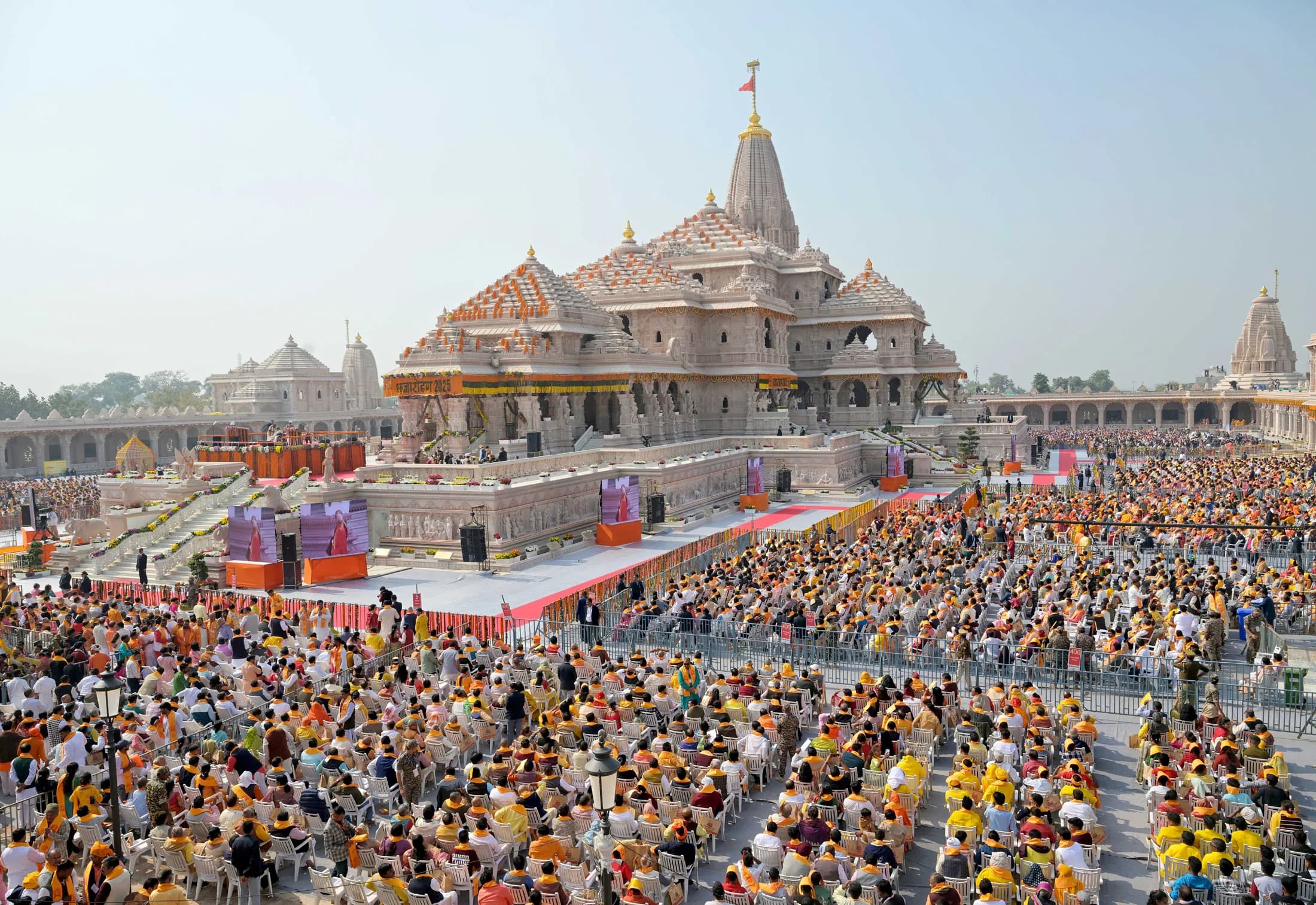
Temple, ritual & pujaOccasions, dining & giftsPhotography & filmsSpecialist servicesAyodhya, on the south bank of the Sarayu, is revered as the birthplace of Ram. Since the consecration of Ram Lalla on 22 January 2024, its life has turned around the Shri Ram Janmabhoomi Mandir, whose construction was marked complete when the temple flag was raised on 25 November 2025. The older temple town is still here: Hanuman Garhi on its mound, Kanak Bhawan's courtyard and the ghats of Ram Ki Paidi.
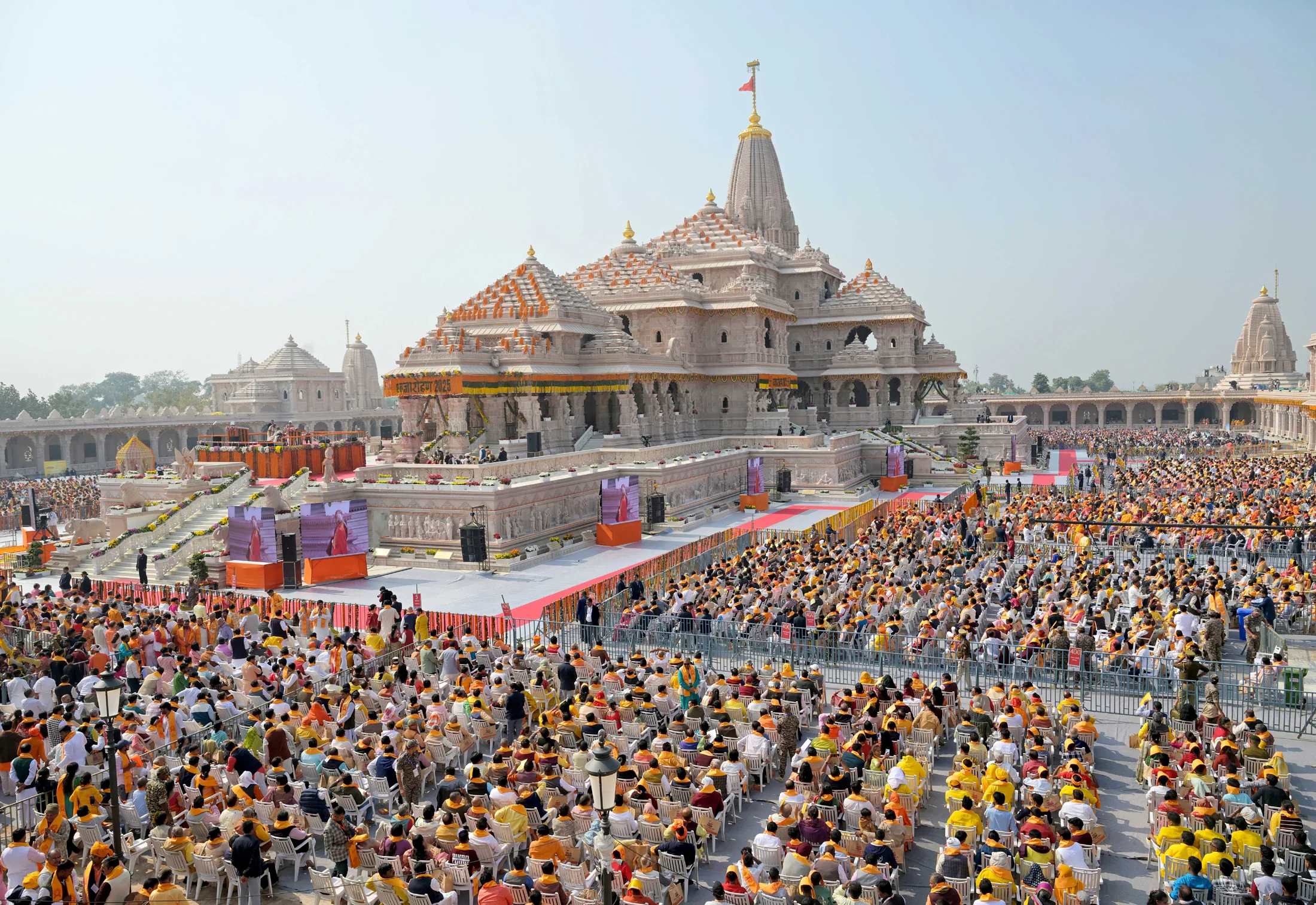
The Ram Mandir is built in the Nagara style from pink sandstone, its pillars carved with deities, and the image of Ram Lalla in the sanctum shows Ram as a child. Security is strict. Phones, bags and electronic items are deposited before entry, and the approach involves a long walk and a queue. Darshan follows the temple trust's timings, which change around festivals, and any passes the trust issues are applied for only through its official channels. No one, Tourmelloh included, can promise a particular time at the sanctum.
Hanuman Garhi, a fortress-like temple on a mound, is reached by a steep flight of steps, and many pilgrims visit Hanuman before Ram. Kanak Bhawan, a short walk away, is associated with Ram and Sita and has a calm inner courtyard. Nageshwarnath, near Ram Ki Paidi, is a Shiva temple that local tradition links to Ram's son Kush. Older travellers can manage all three with a car to the nearest permitted point and pauses built in, though the stairs at Hanuman Garhi need an honest conversation first.
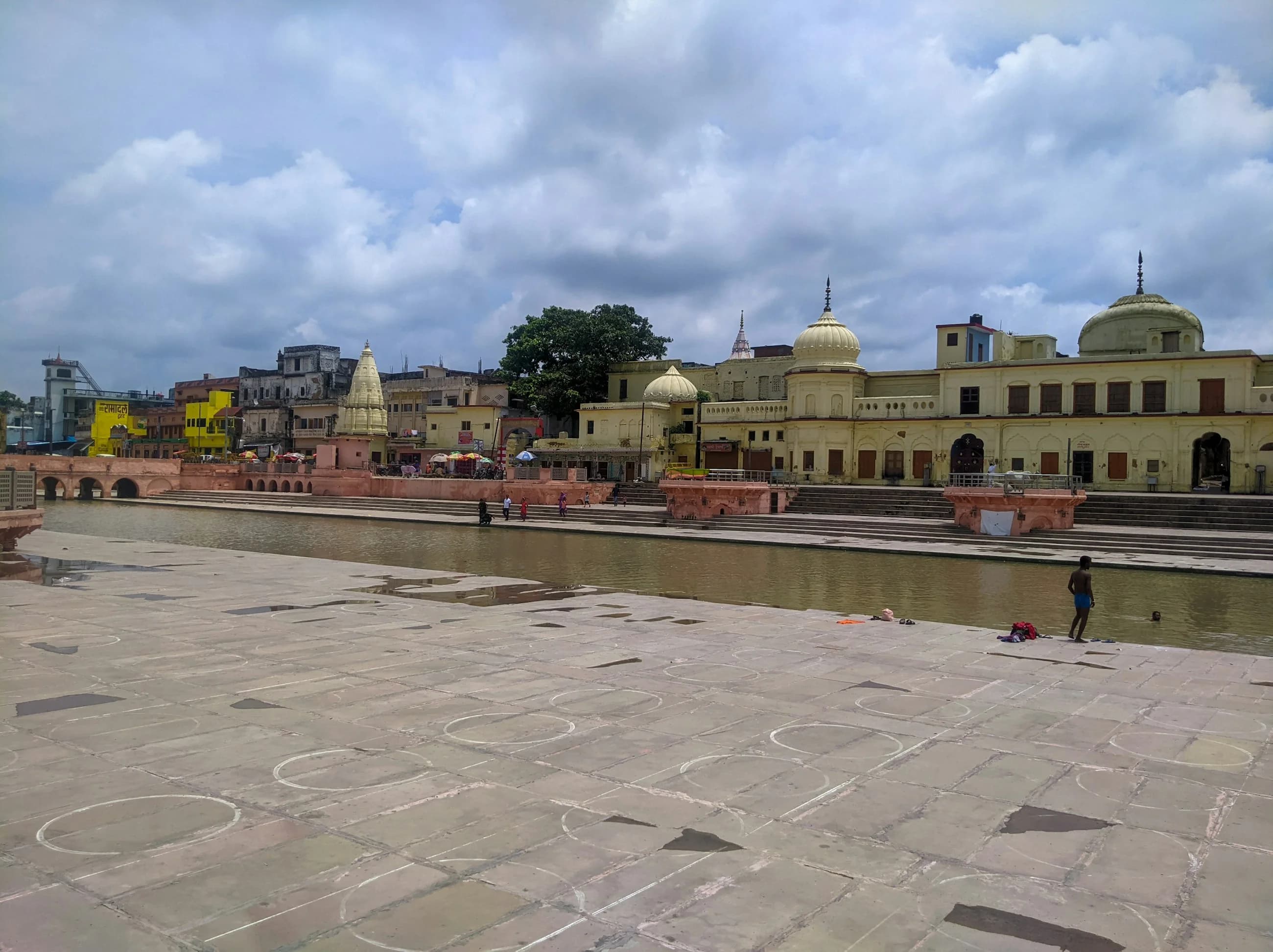
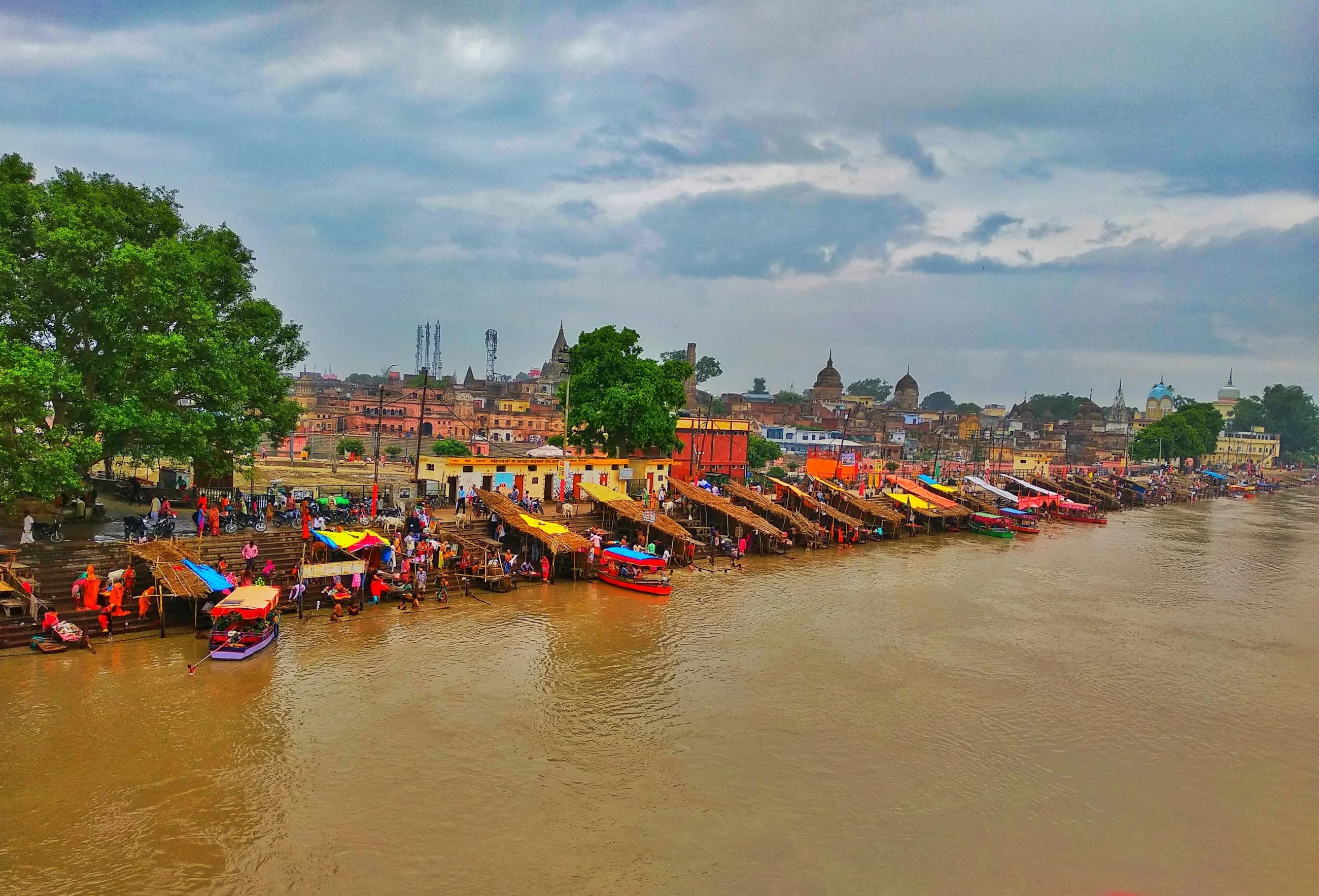
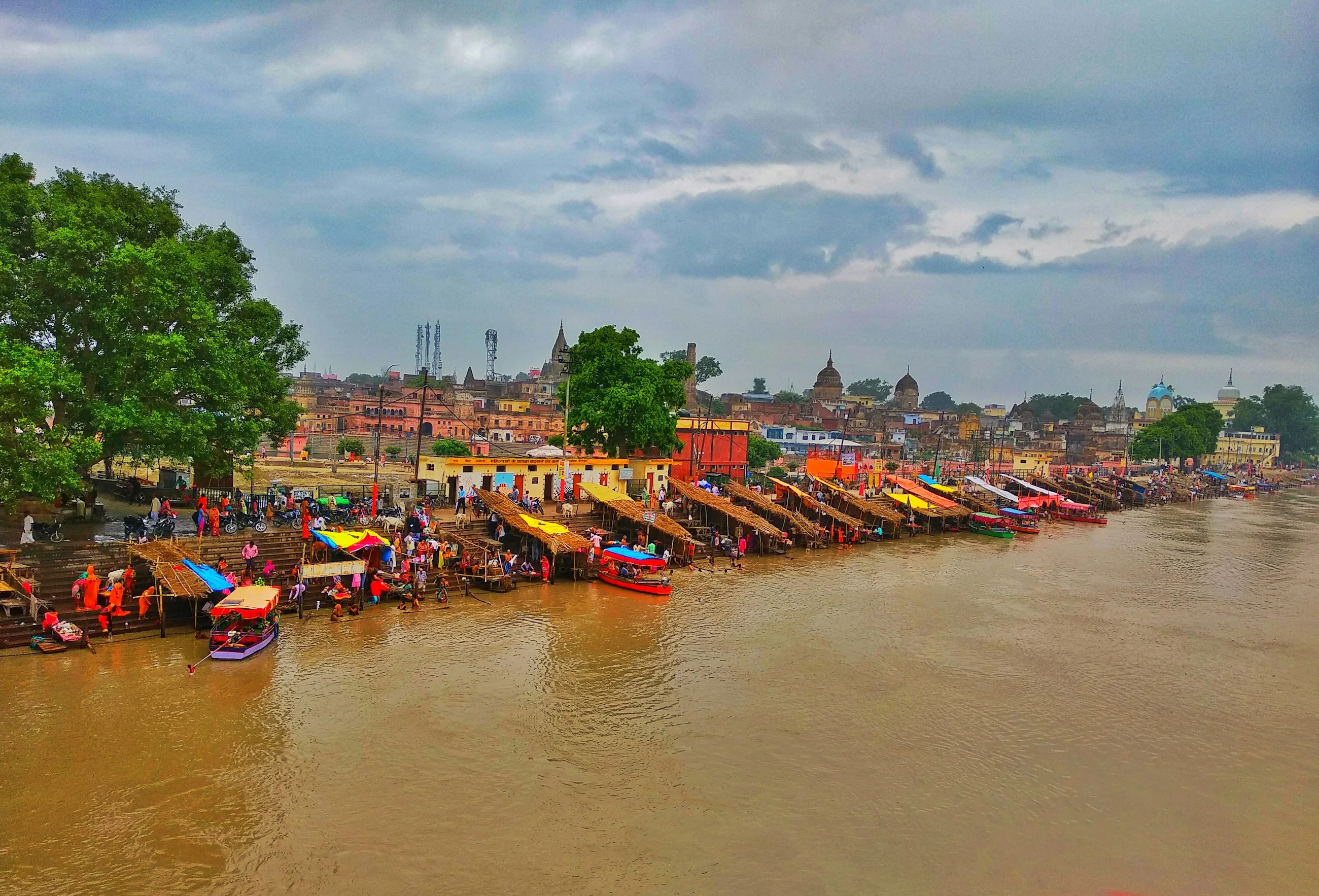
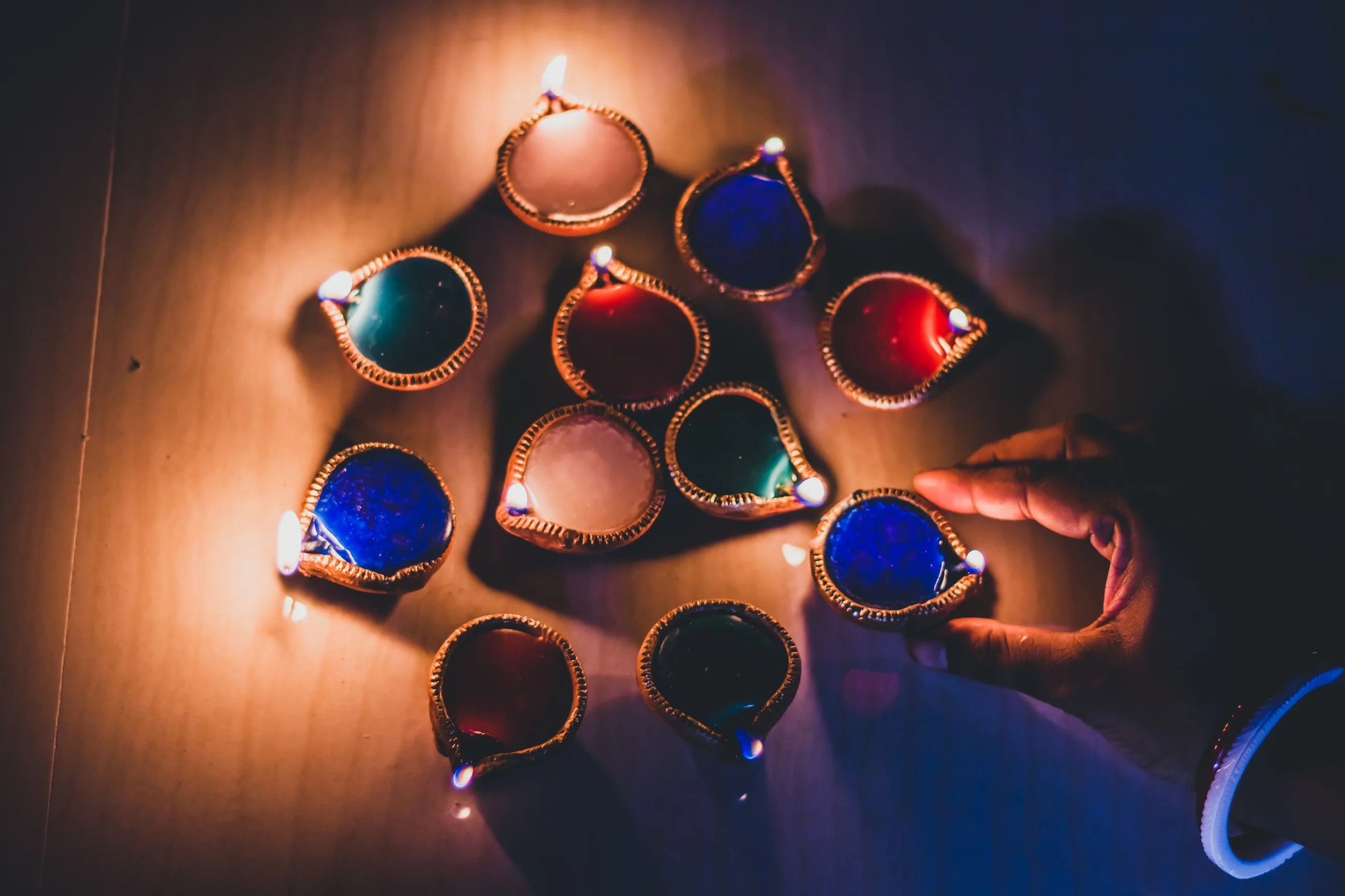
Evenings belong to the river. Ram Ki Paidi is a run of ghats along a channel of the Sarayu, and families come down at dusk with leaf boats of flowers and lamps for the Sarayu aarti. On the eve of Diwali, Deepotsav lines the riverfront with clay lamps; in 2025 more than 26 lakh were lit across 56 ghats, a Guinness World Record. Ram Navami in spring brings very large crowds too. Both are extraordinary to see, and both need rooms, cars and movement planned months ahead.
Give the temple a clear morning with no onward drive pressing. Expect security checks, a long walk along the approach and a brief, intense moment before the image. Travel light and agree a meeting point for afterwards.
A steep stair to the shrine many pilgrims visit before Ram Mandir, where the image shows the young Hanuman with his mother Anjani. Take it slowly, and decide beforehand who climbs and who waits in the shade.
A temple to Ram and Sita that tradition connects with Sita's arrival in Ayodhya. Sit in the courtyard for a few minutes before darshan; it is one of the calmest spaces in the town.
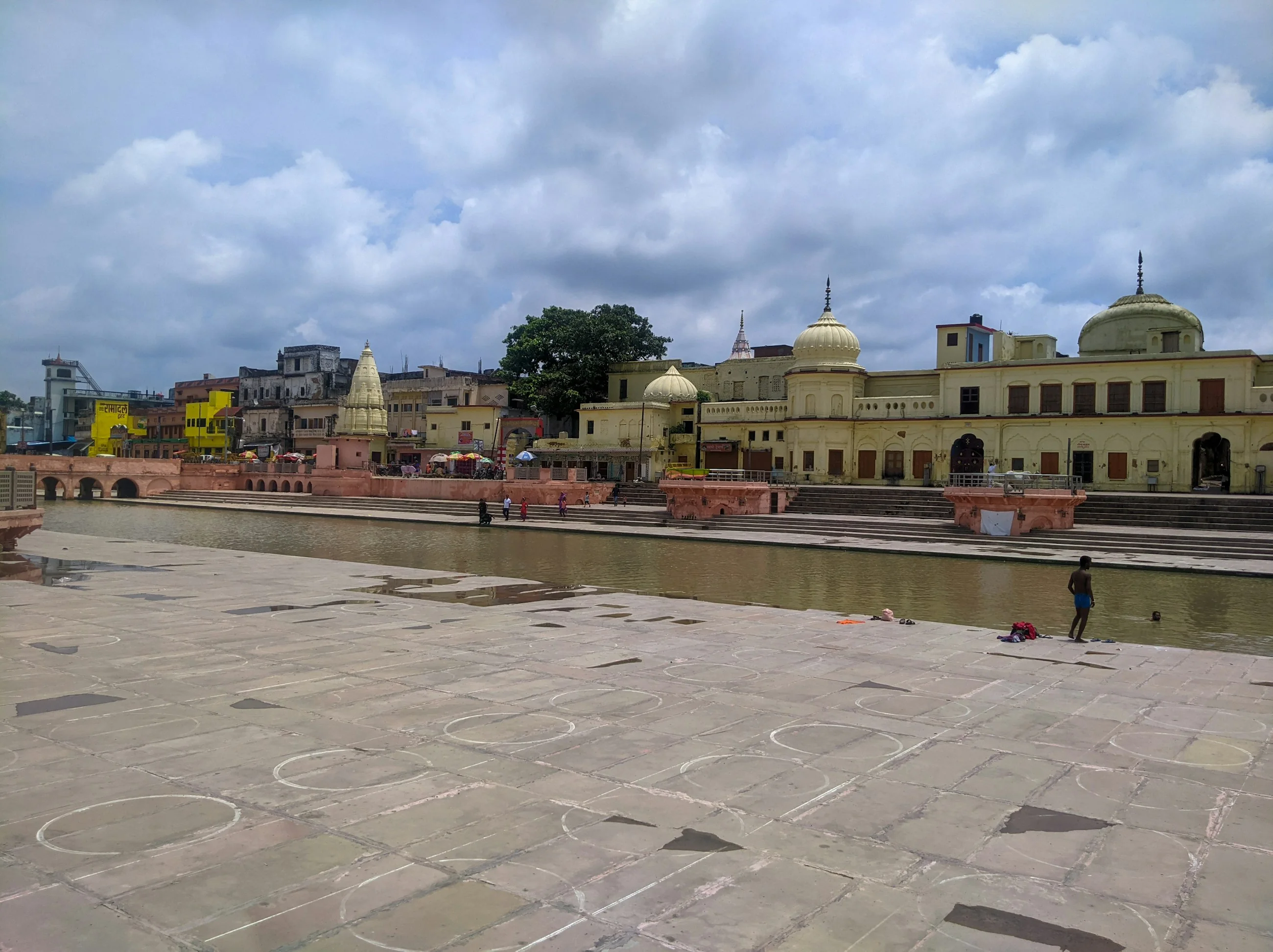
Stepped ghats and temple facades along a channel of the Sarayu, easiest to enjoy in the late afternoon when the light softens and families come down to the water.
Lamps raised over the river at dusk, leaf boats of marigolds set on the current and bells across the water. Check the timing for your particular evening, and ask about boats only where local rules allow them.
On the eve of Diwali the riverfront is lined with lakhs of clay lamps. It is one of the busiest nights of the town's year, with closures and traffic controls, so plan it months ahead or choose another week.
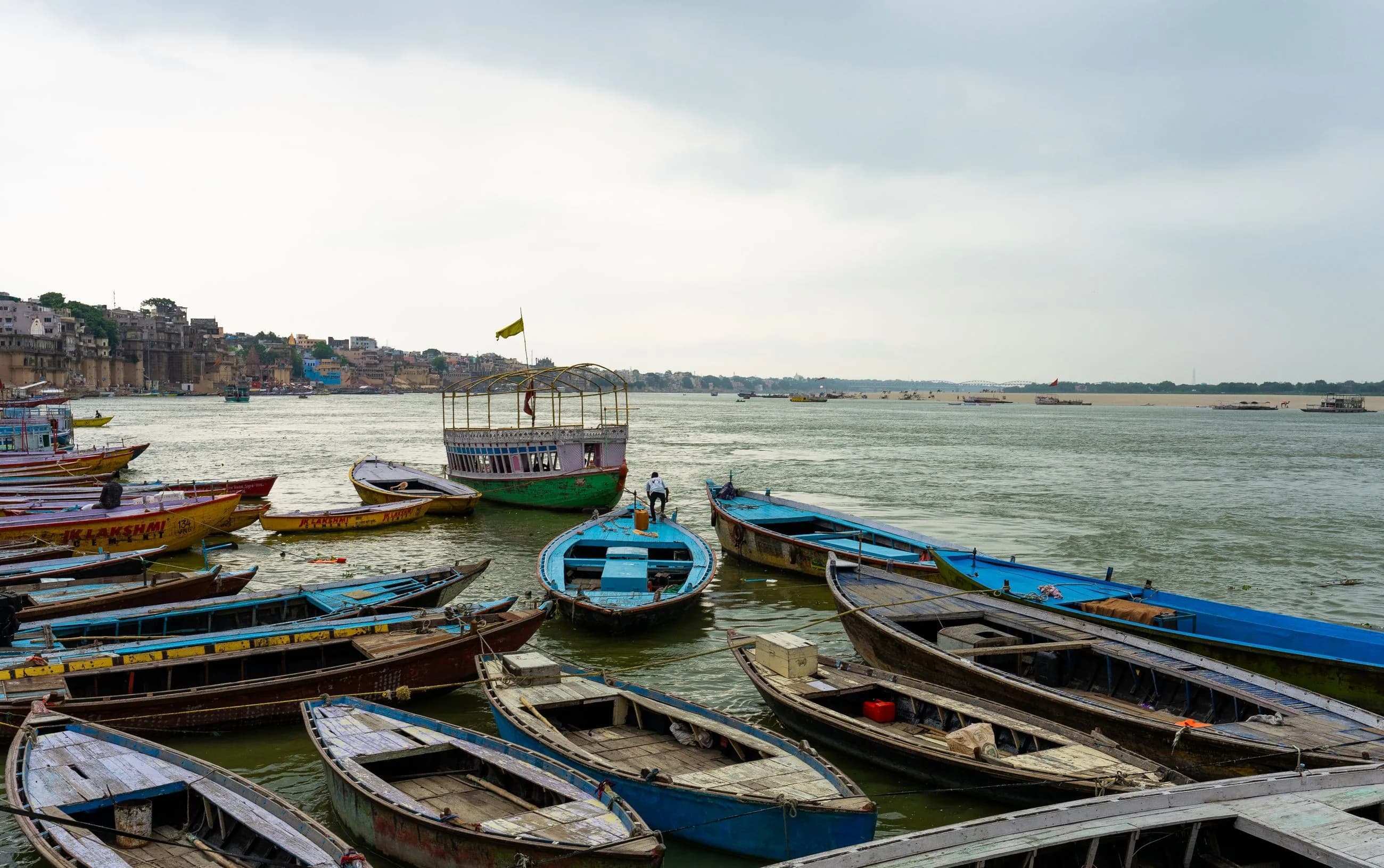
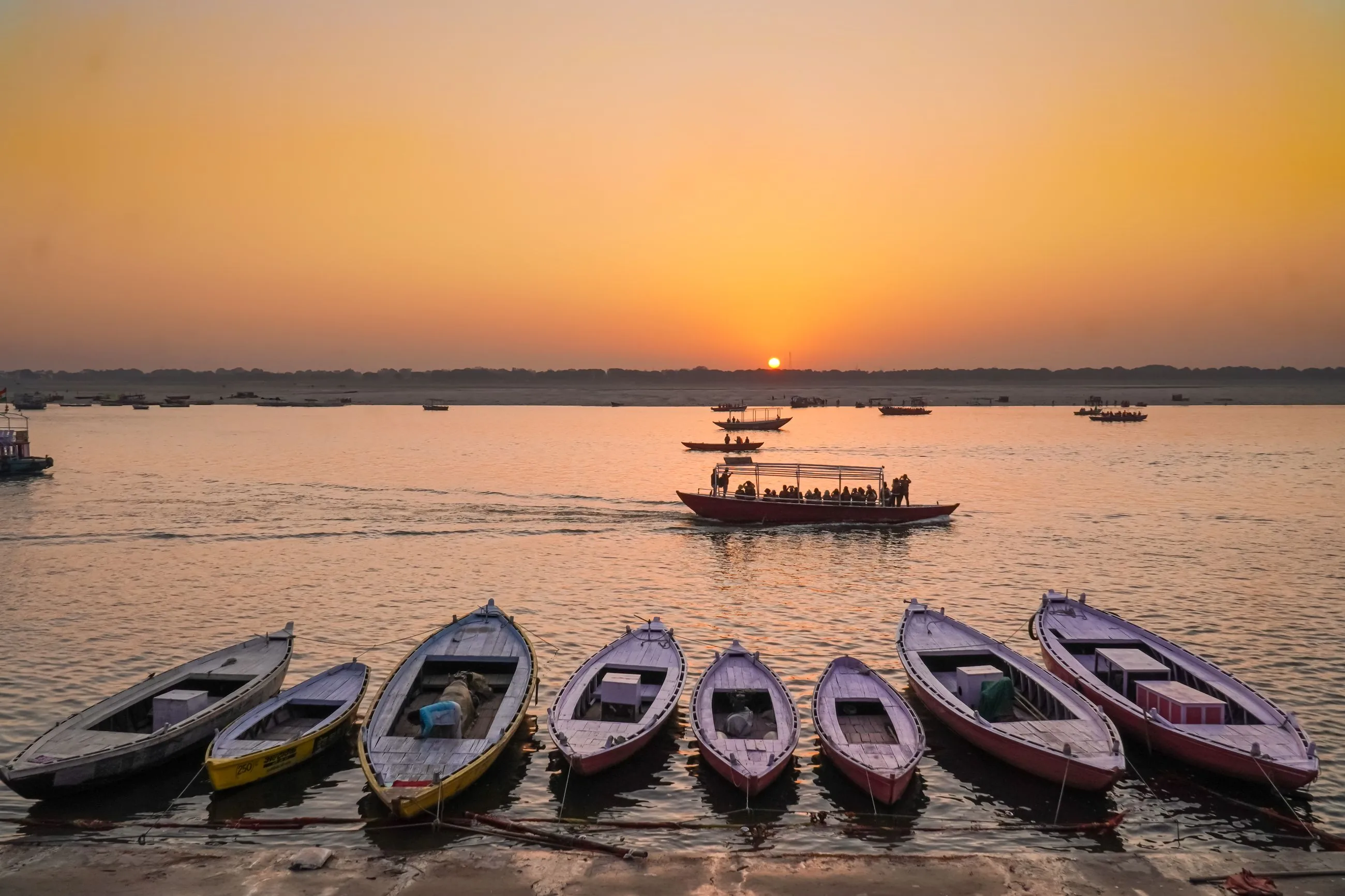
A suggested five-day pilgrimage: the aarti from a boat, Kashi Vishwanath and Sarnath in Varanasi, then the Sarayu aarti, the Shri Ram Janmabhoomi Mandir, Hanuman Garhi, Kanak Bhawan and Ram Ki Paidi in Ayodhya.
A suggested six-day pilgrimage through three sacred towns: Kashi Vishwanath, Annapurna, the Ganga and Sarnath at Varanasi, a holy dip at the Sangam in Prayagraj, and the Sarayu and the Shri Ram Janmabhoomi Mandir at Ayodhya.
Seven nights across four pilgrim places: Kashi and Sarnath, a snan at the Sangam, the ghats and hills of Chitrakoot, and three nights in Ayodhya on the Sarayu.
Two nights in Ayodhya: the Saryu aarti at Naya Ghat, darshan at the Ram Mandir, Hanuman Garhi, Kanak Bhawan, Dashrath Mahal and Mani Parbat, and a last morning at Guptar Ghat and Ram ki Paidi.
Special entry cannot be promised. Access is controlled by the temple trust; where it issues passes, they are applied for through its official channel, and the day is planned around what is actually confirmed.
Expect to deposit phones, bags and electronics before the security line. The rules are set by the trust and can change, so they are checked again in the week you travel.
Yes, with care. The approach to Ram Mandir involves a long walk and Hanuman Garhi has a steep stair. Drop-off points, rests and a slower order of visits are planned around the people travelling.
Yes. The Sacred Confluence joins all three over a suggested six days. The order depends on gateways and train or flight timings, and nights are allocated so that no darshan sits against a long drive.
Tell us the places on your mind, your dates and who is travelling. We reply with a written proposal shaped around you.